Morning Yoga vs Evening Yoga — What Actually Works Better for You?

🌅 Or 🌙 — When Is the “Right” Time for Yoga?
One of the most common questions people have is:
Should I do yoga in the morning or evening?
Many beginners researching morning vs evening yoga are usually trying to find the most sustainable and practical routine for daily life.
Some say:
- Morning yoga is best
Others say:
- Evening yoga is more practical
👉 The truth is not so simple.
The best time to do yoga depends on:
- your body
- your lifestyle
- your daily routine
- and your personal goals
When choosing between morning vs evening yoga, consistency matters more than perfection.
⚖️ The Real Answer: Both Morning and Evening Yoga Can Work
Many people comparing morning vs evening yoga are surprised to learn that consistency matters more than timing alone. Yoga is not only about timing.
It is about:
- consistency
- awareness
- correct practice
👉 Morning yoga and evening yoga both offer benefits — they simply support the body in different ways.
The debate around morning vs evening yoga is less about perfection and more about long-term consistency.
🌅 Morning Yoga — Why Many People Prefer It
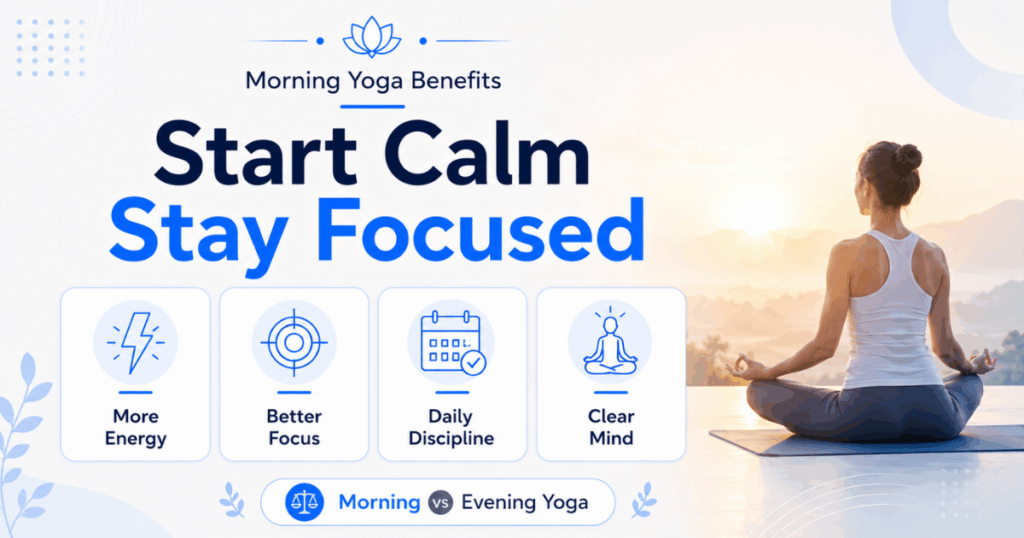
When evaluating morning vs evening yoga, many people choose morning practice for better focus and discipline. Morning yoga is traditionally considered ideal because the body and mind are fresh.
Benefits of Morning Yoga
- Fresh mind with fewer distractions
- Helps set the tone for the day
- Boosts energy levels naturally
- Improves focus and mental clarity
- Helps build discipline and routine
Many people practicing 20 minutes of yoga daily notice improved focus, better energy levels, and stronger consistency over time.
👉 Morning yoga is especially helpful for:
- working professionals
- students
- people with structured schedules
When comparing morning vs evening yoga, many people prefer morning sessions for focus and discipline.
⚠️ But There Is a Challenge with Morning Yoga
Morning yoga also requires:
- discipline
- waking up early
- adjustment in daily routine
👉 Many people start morning yoga with motivation but struggle to continue consistently.
That is why sustainability matters more than choosing the “perfect” time.
🌙 Evening Yoga — The Practical Option for Many People
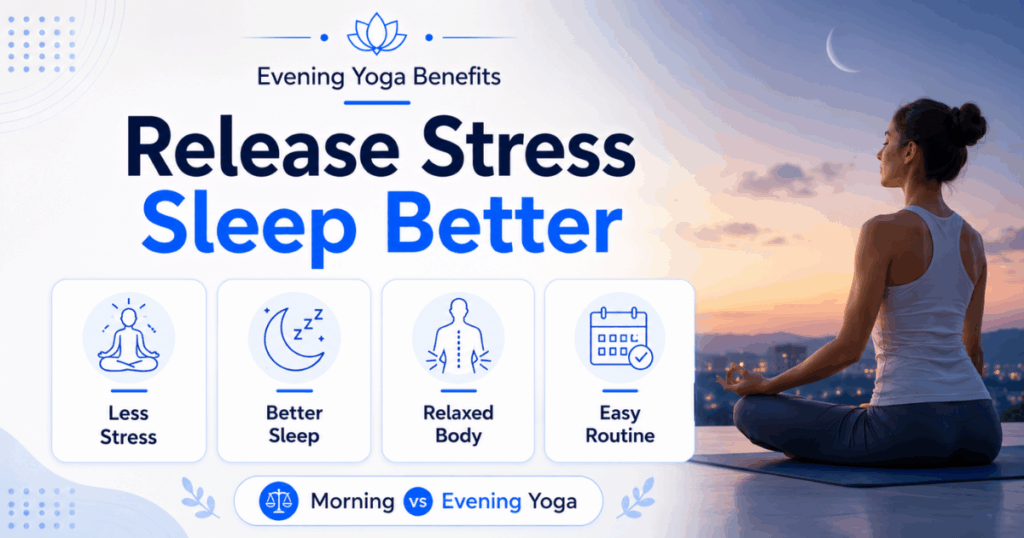
Evening yoga often fits better into modern lifestyles.
After a busy day, yoga can help the body and mind relax naturally.
Benefits of Evening Yoga
- Helps release stress from the day
- Reduces body stiffness
- Improves sleep quality
- Feels easier to maintain consistently
- Helps relax both mind and body
👉 Evening yoga is especially helpful for:
- people with hectic mornings
- beginners building a yoga habit
- people looking for stress relief and relaxation
For many people in India and other busy urban lifestyles, evening yoga feels more practical and sustainable. For busy professionals, morning vs evening yoga often becomes a question of lifestyle practicality rather than effectiveness.
⚠️ But Evening Yoga Also Has Challenges
Evening practice can sometimes become difficult because of:
- fatigue after work
- distractions at home
- irregular timing
- lack of energy late in the day
👉 So here too, consistency becomes the real challenge.
🎯 So What Should You Choose?
Instead of asking:
“Which is better?”
Ask:
“What can I do consistently?”
This question usually leads to a more realistic and sustainable yoga routine.
✅ Simple Guideline for Choosing the Best Time to Do Yoga
Choose Morning Yoga If:
- you want better focus and discipline
- your mornings are relatively free
- you enjoy starting the day actively
- you want natural energy for the day ahead
Choose Evening Yoga If:
- your mornings feel rushed
- you want stress relief and relaxation
- your schedule is unpredictable
- you prefer winding down after work
👉 The right yoga timing is the one that supports long-term consistency.
🔁 What Matters More Than Timing
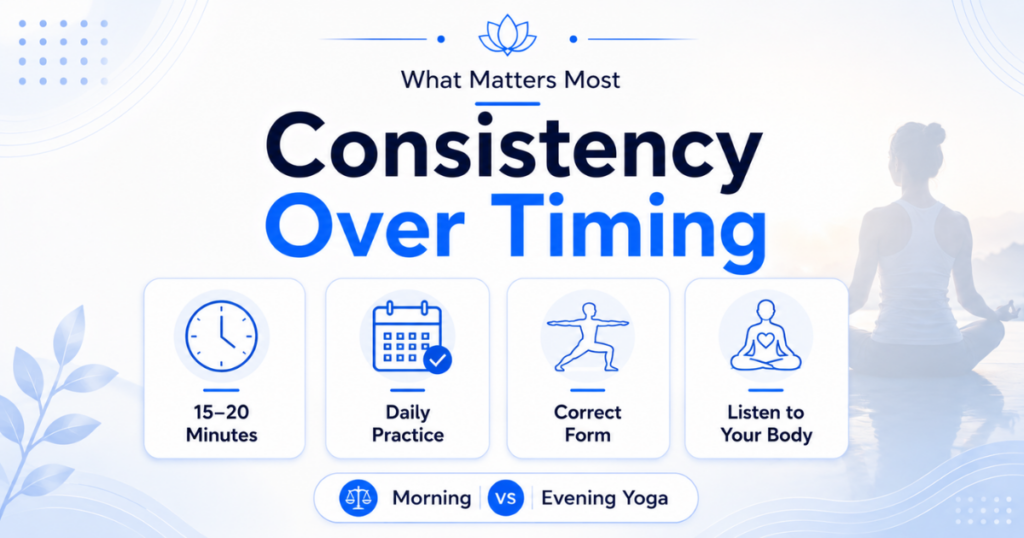
No matter when you practice yoga:
- 15–20 minutes is enough
- consistency is key
- correct practice matters
- listening to your body is important
👉 These factors matter far more than morning or evening timing alone.
A simple daily yoga routine done consistently usually gives better results than irregular long sessions.
🧩 A Smart Approach That Works for Many Beginners
A practical approach for beginners is:
Start With:
- evening yoga
- shorter sessions
- easy habit-building routines
Then Gradually:
- shift toward morning yoga if possible
- create a stable daily rhythm
- improve consistency naturally
👉 This approach reduces pressure and supports long-term habit formation.
🔚 Final Thought
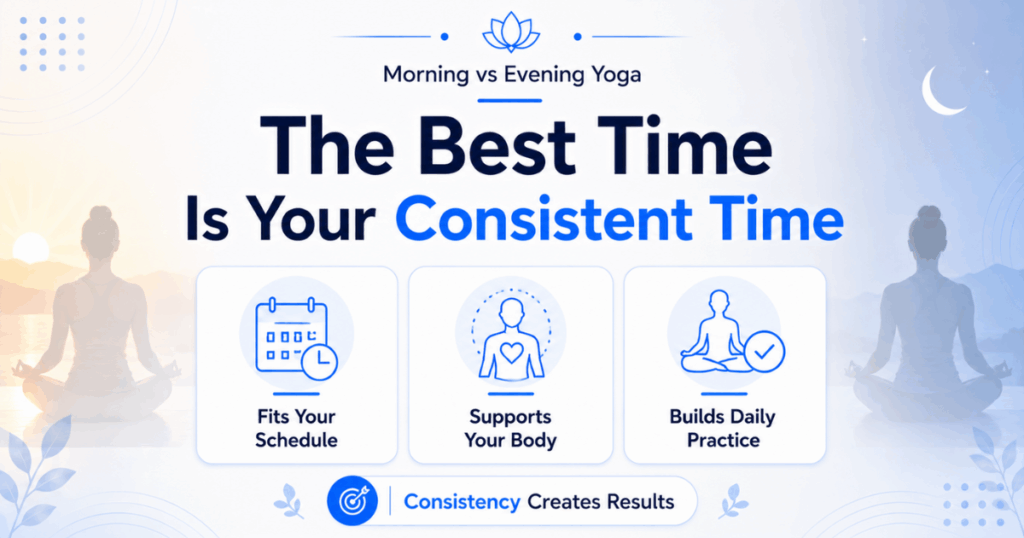
Ultimately, morning vs evening yoga is a personal choice based on your body, schedule, and consistency. There is no “perfect time” for yoga.
The best time to do yoga is:
- the time you can stay consistent with
- the time that suits your body and lifestyle
- the time that helps you practice regularly
Whether you choose morning yoga or evening yoga, regular practice is what truly creates long-term physical and mental benefits.
FAQs About Morning vs Evening Yoga
Is morning yoga better than evening yoga?
Not necessarily. Morning yoga and evening yoga both offer benefits. The best option depends on your schedule, energy levels, and consistency.
Can beginners do yoga in the evening?
Yes. Evening yoga is often easier for beginners because it fits more naturally into busy schedules and helps reduce stress.
What is the best time to do yoga daily?
The best time to do yoga daily is the time you can follow consistently without stress or pressure.
Is 20 minutes of yoga enough?
Yes. Even 15–20 minutes of daily yoga can support flexibility, focus, stress relief, and overall well-being when practiced consistently.