Back Pain? Try These 5 Simple Yoga Practices Before You Take Medicines

Back Pain Has Quietly Become Part of Daily Life
Yoga for back pain relief is becoming increasingly popular as more people look for natural ways to reduce stiffness and improve mobility. Incorporating yoga for back pain relief into your daily routine can be highly beneficial.
Back pain is becoming increasingly common in modern lifestyles.
Long working hours, poor posture, and lack of movement are affecting people of all age groups.
Common daily habits that contribute to back pain include:
- sitting for long hours
- working continuously on laptops
- excessive phone usage
- lack of physical activity
For many people, back pain is now:
- daily
- ignored
- or temporarily managed with painkillers
But in many cases, the body is not asking for medicine first.
It is asking for movement, posture correction, and better physical support.
Why Back Pain Happens: Most Common Reasons
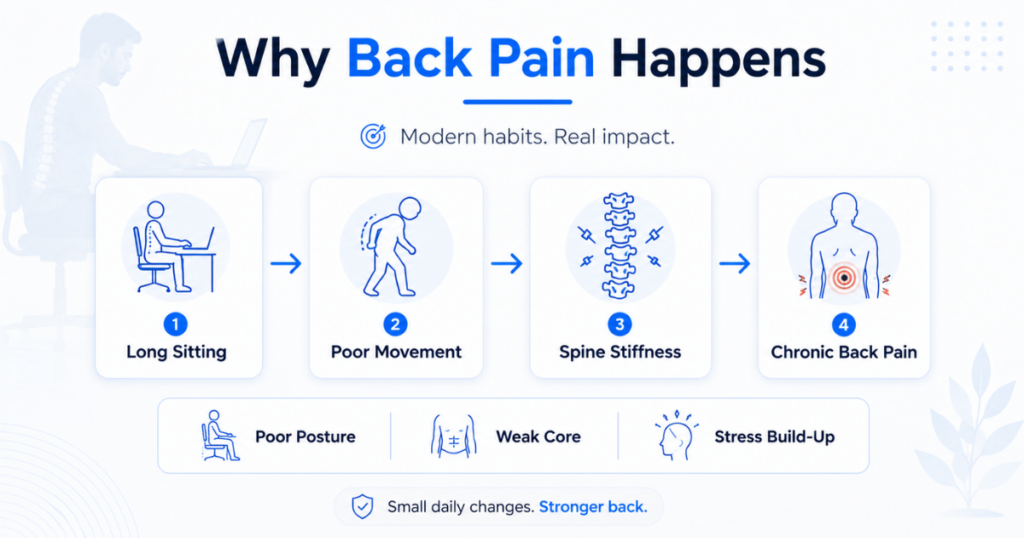
Today, back pain is often lifestyle-related rather than injury-related.
Some of the most common causes of back pain include:
- prolonged sitting without movement
- weak core muscles
- poor posture
- lack of stretching
- stress buildup in the body
👉 Over time, these habits create:
- muscle stiffness
- poor spinal mobility
- body imbalance
- chronic discomfort and pain
Lower back pain especially is strongly connected to modern sedentary routines.
Can Yoga Help with Back Pain?
Yes — when practiced correctly and consistently.
Consistent yoga for back pain relief may help improve flexibility, posture, and spinal movement over time.
Yoga for back pain can help by:
- improving flexibility
- strengthening support muscles
- correcting posture
- improving spinal mobility
- releasing stored body tension
👉 The key is simple and consistent practice, not advanced or complex poses.
Gentle yoga movements are often more effective than forcing difficult positions.
5 Simple Yoga Practices for Back Pain Relief
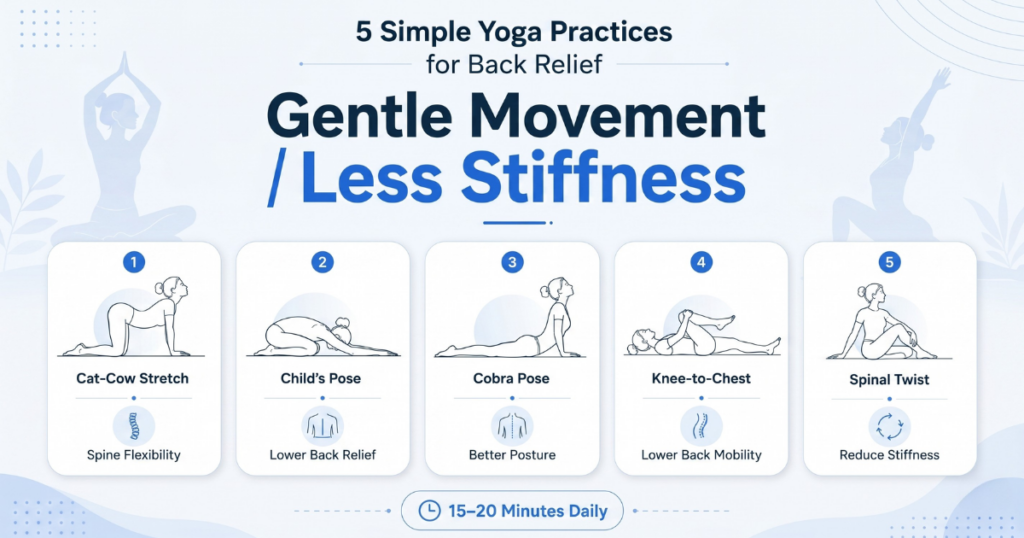
These beginner-friendly movements make yoga for back pain relief easier and usually be done in just 15–20 minutes daily.
1️⃣ Cat-Cow Stretch (Marjariasana)
What It Does
- improves spine flexibility
- reduces stiffness
- improves movement in the back and neck
How to Do It
- come onto all fours
- inhale and arch the back while looking upward
- exhale and round the spine with chin toward chest
- repeat slowly with controlled breathing
This movement gently mobilizes the spine and helps improve posture awareness.
2️⃣ Child’s Pose (Balasana)
What It Does
- relaxes the lower back
- releases tension in the spine
- calms the nervous system
How to Do It
- sit back on the heels
- stretch the arms forward
- rest the forehead gently on the floor
Child’s Pose is one of the most effective beginner yoga poses for stress and back relief.
3️⃣ Cobra Pose (Bhujangasana)
What It Does
- strengthens the lower back
- improves spinal extension
- supports better posture
How to Do It
- lie comfortably on the stomach
- place hands near the chest
- gently lift the chest upward
- keep shoulders relaxed and avoid overstraining
This pose helps counteract slouching caused by prolonged sitting.
4️⃣ Knee-to-Chest Pose
What It Does
- relieves lower back pressure
- improves hip and spine mobility
- stretches the lower back muscles
How to Do It
- lie flat on the back
- slowly pull the knees toward the chest
- hold gently while breathing naturally
This simple stretch can help reduce tightness in the lower back area.
5️⃣ Gentle Spinal Twist
What It Does
- improves spinal movement
- reduces stiffness
- relaxes surrounding muscles
How to Do It
- lie comfortably on the back
- drop the knees slowly to one side
- keep both shoulders grounded
Gentle twisting movements can help improve spinal flexibility and relaxation.
What to Expect with Consistent Practice
With regular yoga practice for 2–3 weeks, many people may notice:
- reduced stiffness
- improved mobility
- less frequent discomfort
- better posture awareness
- easier daily movement
Small daily improvements can create meaningful long-term benefits for spinal health.
Common Mistakes to Avoid
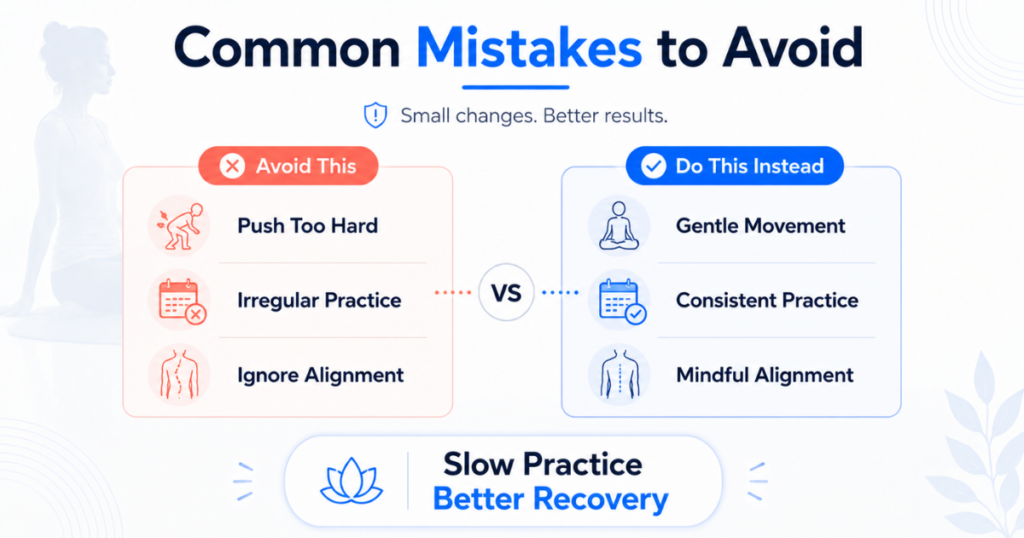
Many people:
- push too hard during practice
- expect instant relief
- practice irregularly
- ignore posture alignment
👉 These habits often slow down recovery and increase discomfort.
Gentle, mindful movement is usually more effective than aggressive stretching.
What Actually Works for Back Pain Relief
For many beginners, yoga for back pain relief works best when practiced slowly and consistently instead of aggressively.
The most effective approach usually includes:
- slow and controlled movement
- short daily practice sessions
- proper posture awareness
- listening carefully to the body
👉 Consistency is more important than intensity.
Many people also find that practicing 20 minutes of yoga daily can improve energy levels, reduce stress, and support overall physical well-being naturally.
Even 15–20 minutes of yoga daily can help support long-term back health.
Important Note
If back pain is:
- severe
- caused by injury
- accompanied by numbness
- or persistent for a long period
👉 Consult a medical professional before starting yoga or any exercise routine.
FAQs
1. Can yoga help reduce back pain naturally?
Yes. Gentle yoga practices can improve flexibility, posture, muscle support, and spinal mobility, which may help reduce back pain naturally over time.
2. Which yoga pose is best for lower back pain beginners?
Child’s Pose and Cat-Cow Stretch are beginner-friendly yoga poses commonly recommended for reducing stiffness and improving spinal movement safely.
3. How often should beginners practice yoga for back pain relief?
Many beginners benefit from practicing yoga for back pain relief for about 15–20 minutes daily with slow and consistent movement.
4. Why does sitting for long hours cause back pain?
Long sitting hours can weaken support muscles, reduce mobility, increase stiffness, and create poor posture habits that stress the spine.
5. When should someone avoid yoga for back pain?
If back pain is severe, injury-related, persistent, or accompanied by numbness, it is important to consult a medical professional before starting yoga.
Final Thought
Over time, yoga for back pain relief may help support healthier movement patterns and reduce everyday discomfort naturally.
Your back pain is not just a problem.
It is often a signal from the body.
Instead of only suppressing symptoms temporarily, support your body with proper movement, posture correction, and consistent care.
Simple daily yoga practices may help improve flexibility, reduce stiffness, and support a healthier back naturally over time.