Starting Yoga After 30: What You Should Know Before You Begin
“Starting yoga after 30?” — This is probably the most common question we hear. And our honest answer? No. In fact, for many people, 30 is exactly the right time to begin.
A lot of people think about yoga for months, sometimes even years, before actually beginning. Not because they are lazy or uninterested, but because they quietly feel:
- “My body feels too stiff now.”
- “I’m not flexible enough.”
- “I should have started earlier.”
- “Yoga is probably easier for younger people.”
If you’ve had these thoughts too, you’re definitely not alone.
By the time people reach their 30s, life often becomes busier and more demanding. Long sitting hours, work stress, less movement, poor posture, irregular sleep, and mental exhaustion slowly begin affecting the body.
And somewhere in between all of that, many people stop feeling connected to themselves physically.
That’s often the real reason yoga starts calling them.
Not to become perfect. Just to feel better again.
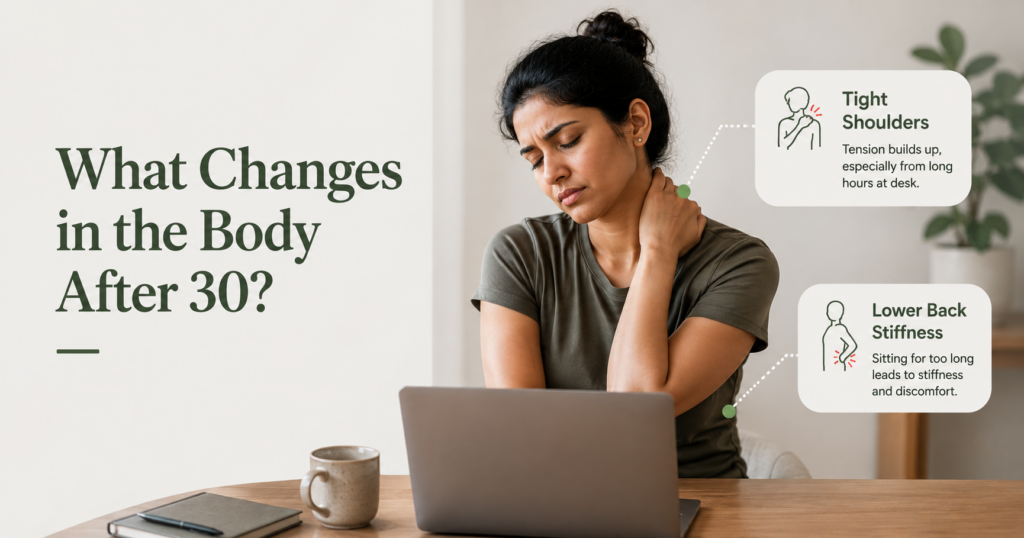
What Changes in the Body After 30?
The body naturally changes with age. That’s normal.
You may notice:
- tighter muscles,
- reduced flexibility,
- slower recovery,
- stiffness after sitting too long,
- or lower energy than before.
Sometimes the signs are small:
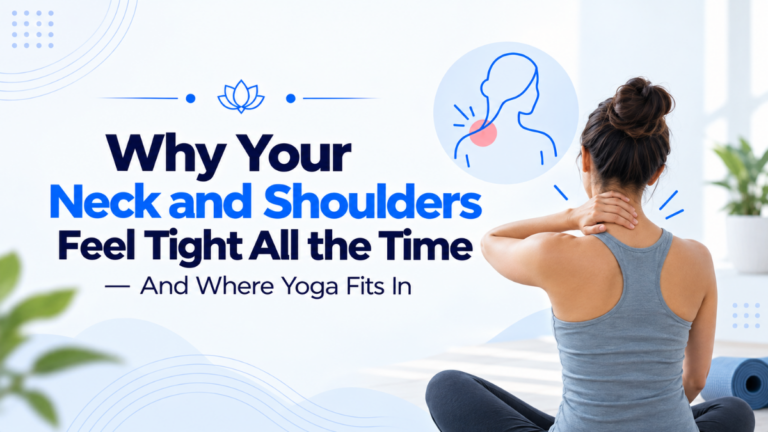
- tight shoulders after work,
- discomfort in the lower back,
- feeling stiff while getting up from the floor,
- or waking up feeling tired even after sleeping.
And honestly, modern lifestyle adds to it.
Most people spend a huge part of their day:
- sitting,
- looking at screens,
- multitasking,
- rushing through meals,
- and carrying stress in the body without realizing it.
Over time, the body starts holding all of this tension quietly.
But this does not mean your body is weak or “too old” for yoga.
It usually means your body needs movement, care, and a chance to slow down a little.
Why Yoga Becomes More Meaningful After 30
When people start yoga younger, they are often focused on flexibility, fitness, or advanced poses.
But after 30, the intention usually changes.
Most people simply want:
- less stiffness,
- better movement,
- improved sleep,
- reduced stress,
- more energy,
- and a calmer mind.
And honestly, that’s a beautiful reason to begin.
Starting Yoga after 30 often becomes less about “performance” and more about balance.
It teaches you to:
- move more mindfully,
- breathe more deeply,
- notice tension earlier,
- and treat your body with a little more patience.
For many people, that shift itself feels healing.
You Do Not Need to Be Flexible to Start Yoga
This is one of the biggest myths that stops people from beginning.
A lot of beginners think:
“I’ll start yoga once I become flexible.”
But flexibility is not something you need before yoga.
It’s something yoga slowly helps you build.
Most beginners feel stiff in the beginning. Some cannot touch their toes. Some struggle with basic stretches. Some feel awkward simply sitting cross-legged.
That is completely normal.
Yoga is not about forcing your body into difficult shapes.
It’s about improving mobility, awareness, and comfort gradually over time.
There’s no need to rush.
Your body opens slowly, and that’s perfectly okay.
Common Mistakes Beginners Make After 30
One thing that often causes frustration is trying to do too much too quickly.
Sometimes people:
- copy advanced poses online,
- compare themselves with younger practitioners,
- push beyond their comfort,
- or expect fast physical changes.
This usually leads to soreness, discomfort, or feeling discouraged.
Yoga works very differently.
Progress in yoga is usually slow, steady, and long-term.
And honestly, that’s what makes it sustainable.
A much better approach is:
- starting gently,
- focusing on basic movement,
- practicing breathing,
- and listening to your body properly.
Your body does not need punishment. It needs support.
What Actually Helps When Starting Yoga
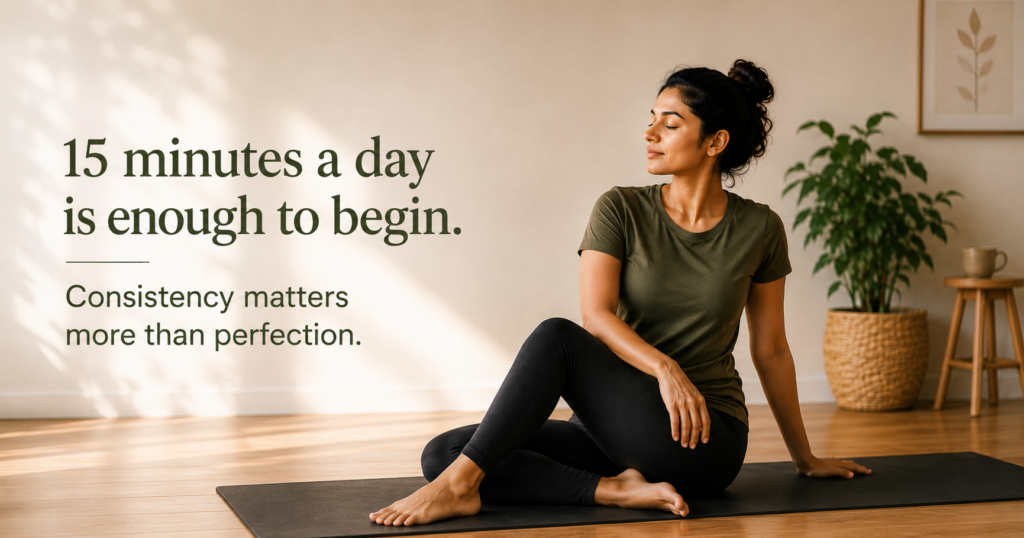
If you are starting yoga after 30, simpler is better.
You do not need intense routines or hour-long sessions.
Even 15–20 minutes a day can be enough to begin.
You can start with:
- gentle stretches,
- beginner-friendly yoga,
- breathing exercises,
- short morning movement,
- or a calming evening practice after work.
The important thing is consistency.
Not perfection.
Even small daily practice can slowly help the body feel lighter, and the mind feel calmer over time.
What You May Notice After a Few Weeks
The first benefits of yoga are usually very simple, but very meaningful.
Many people begin noticing:
- less stiffness,
- easier movement,
- better posture,
- deeper sleep,
- reduced stress,
- and a calmer state of mind.
Some people also notice they feel:
- less reactive,
- more patient,
- and mentally lighter during stressful days.
These changes may feel small initially, but over time, they deeply improve everyday life.
And honestly, that’s where the real value of yoga is.
Not just in how the body looks, but in how life feels.
One Big Advantage of Starting Yoga After 30
Interestingly, people who begin yoga after 30 are often more consistent with it.
Why?
Because they usually understand their body better.
They are less interested in “performing” yoga and more interested in feeling healthy, balanced, and comfortable.
That mindset makes a huge difference.
Instead of chasing difficult poses, they focus more on:
- regular practice,
- patience,
- recovery,
- and long-term wellness.
And that often creates healthier, more sustainable progress.
Sometimes starting later actually means starting wiser.
A Simple Way to Begin
You do not need the perfect body, perfect routine, or perfect flexibility to start yoga.
You can begin very simply.
- A few stretches in the morning.
- Some breathing before sleep.
- A short beginner session after work.
- Ten quiet minutes without rushing.
That is enough.
Start slowly.
Allow your body time to adjust.
And most importantly, try not to judge yourself while learning.
Yoga is not a competition.
Final Thoughts
Starting yoga after 30 is not too late.
Your body may feel different now, but that does not mean it cannot become stronger, lighter, and more balanced with time.
You do not have to start perfectly.
You do not have to be flexible.
And you definitely do not have to compare yourself to anyone else.
You simply have to begin where you are.
And honestly, that is more than enough.
Frequently Asked Questions
Is 30 too late to start yoga?
Not at all. Many people begin yoga in their 30s, 40s, and even later. In fact, starting after 30 often helps people approach yoga with more patience, consistency, and awareness.
Do I need to be flexible before starting yoga?
No. Flexibility is not a requirement for yoga. Most beginners feel stiff in the beginning, and that is completely normal. Flexibility improves gradually with regular practice.
Which type of yoga is best for beginners after 30?
Gentle and beginner-friendly styles like Hatha Yoga, restorative yoga, and simple stretching with breathing exercises are usually the best place to start.
How often should a beginner practice yoga?
You do not need very long sessions. Even 15–20 minutes of yoga a few times a week can help. Consistency matters much more than doing intense practice occasionally.
Can yoga help with stiffness and stress after 30?
Yes, gentle yoga may help reduce body stiffness, improve mobility, and support stress management. Many people also notice better sleep and improved energy with regular practice.