5 Signs Your Body Needs Yoga (And Why You Shouldn’t Ignore Them)
Your body speaks… but we rarely pause to listen
Nobody wakes up one morning and thinks, “I need yoga.”
It doesn’t usually work like that.
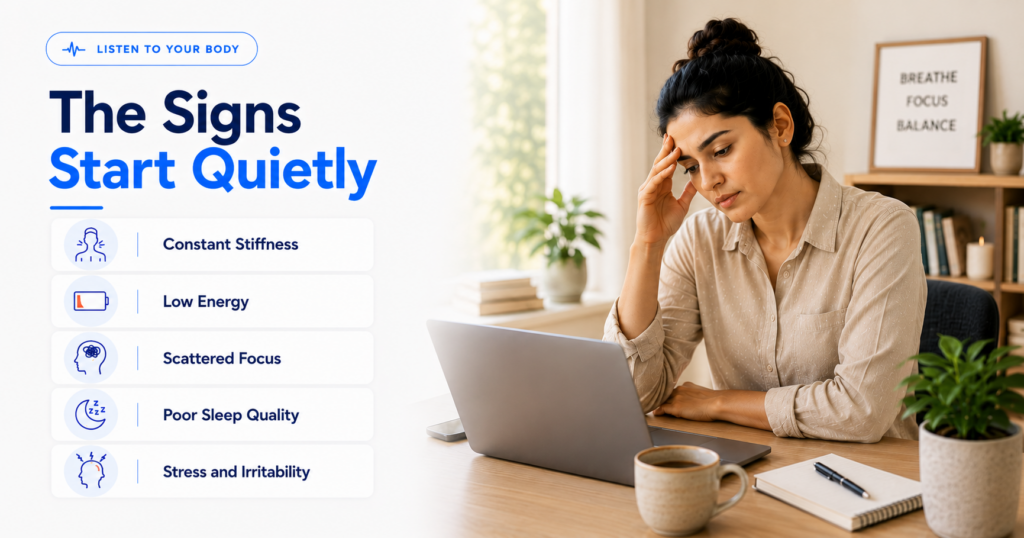
Most of the time, it starts quietly. A stiff neck here. An afternoon energy crash there. Sleep that leaves you feeling more tired than rested.
Individually, these things seem harmless. But together, they often point to the same thing: your body is slowly moving out of balance.
That’s usually how the need for yoga begins. Not through a major crisis, but through small repeated signals asking for support.
The problem is, most of us ignore them until they start affecting everyday life.
Why We Miss the Early Warning Signs
The body is always communicating. We’re just used to treating discomfort as normal.
Shoulders tight after a long day? Probably work stress.
Tired by 3 pm? Maybe just a busy week.
Poor sleep, low mood, scattered focus? We explain it away and move on.
We stretch for a minute.
Drink another coffee.
Promise ourselves we’ll rest on the weekend.
Usually, we don’t.
And over time, this becomes routine. The body keeps adjusting quietly until it finally starts demanding attention in louder ways.
That’s why these early signs matter. They often appear long before chronic pain, burnout, or constant exhaustion show up.
1. Your Body Feels Stiff More Often Than It Should
One of the most common signs is persistent stiffness.
Your shoulders tighten while working.
Your neck never fully relaxes.
Your lower back aches almost every morning.
Even after resting, your body still feels tense instead of relaxed.
This usually happens when movement becomes limited for too long. The body spends hours in the same positions, muscles tighten, and tension slowly becomes the default.
After a while, it starts feeling normal.
But it isn’t.
Simple yoga movements can help gently open areas that stay compressed throughout the day, not through intense exercise, but through slow, regular movement that helps the body feel lighter and more supported again.
2. You Feel Low on Energy Even Without Doing Much
There’s a difference between being busy and feeling exhausted all the time.
If your energy drops too quickly during the day, even on normal days, your body may be asking for better rest, movement, and breathing.
Many people assume tiredness only comes from lack of sleep. But sometimes, the body simply stays under low levels of stress for too long.
Breathing becomes shallow.
The body stays tense.
Everything starts feeling heavier than it should.
That’s why gentle yoga can feel surprisingly refreshing.
The combination of movement and conscious breathing helps the body feel awake again in a calmer, steadier way.
3. Your Mind Feels Constantly Distracted
Sometimes the first sign isn’t physical at all.
You sit down to focus, but your attention keeps shifting.
Your mind feels crowded.
Even during quiet moments, you struggle to fully slow down.
For many people, this has become so normal that they barely notice it anymore.
But often, it’s simply a sign that the mind and body haven’t had a real moment of calm in a long time.
Yoga helps in a quiet but powerful way.
Not just because of the stretching, but because it teaches you to pause. To breathe more deeply. To bring your attention back to the present moment instead of constantly jumping ahead.
Over time, that sense of calm starts carrying into everyday life too.
4. You Sleep Enough but Still Wake Up Tired
This one is easy to overlook because it doesn’t always feel like a sleep issue.
You may be getting enough hours of sleep, but still waking up tired, heavy, or mentally drained.
That usually means the body is resting, but not fully recovering.
Stress has a way of staying in the system quietly. The mind keeps running in the background. Muscles stay mildly tense. The body never completely settles.
So even after sleeping, you still don’t feel restored.
Gentle evening stretches and breathing exercises can help the body relax more deeply and improve the quality of rest over time.
Sometimes, that’s what the body needs most. Not more stimulation, but deeper recovery.
5. Small Things Are Triggering Stress or Irritation
You notice yourself becoming irritated more easily.
Small delays feel overwhelming.
There’s a constant feeling of restlessness sitting quietly in the background.
Sometimes, this has less to do with what’s happening around you and more to do with how overloaded your system has become.
When the body stays in stress mode for too long, it forgets how to fully relax between daily pressures.
Yoga helps bring the body back to a calmer state through breath, movement, and mindfulness.
And slowly, that emotional steadiness starts changing how you move through the day.
What These Signs Actually Mean
If you recognise yourself in any of this, it doesn’t mean your body is failing.
It’s simply giving you feedback.
You may be:
- mentally overstimulated
- physically under-moved
- carrying more stress than your body is able to recover from
These signs aren’t random inconveniences.
They’re signals that your body needs a little more care and balance.
How Yoga Helps Restore Balance
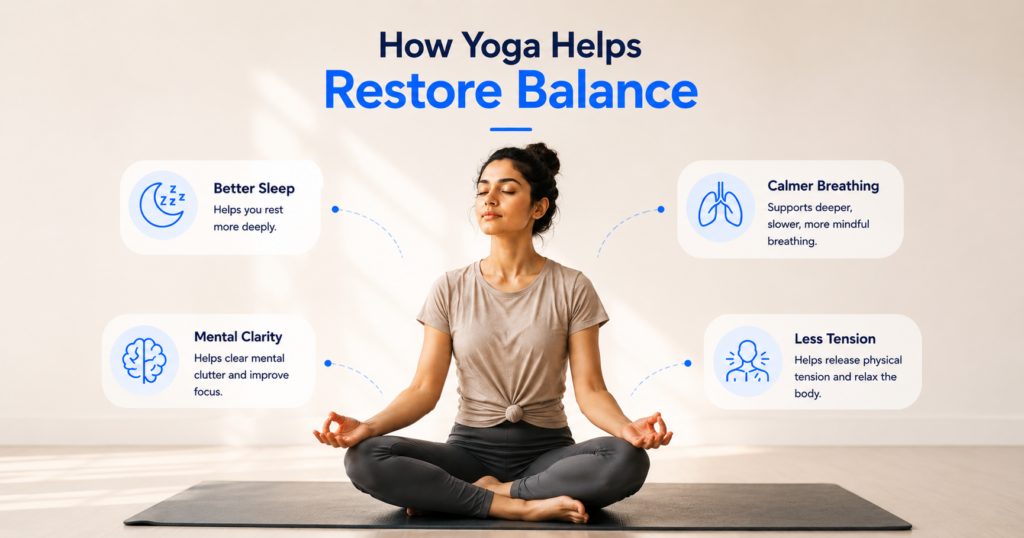
Yoga works because it supports the body in multiple ways at once.
It helps improve:
- flexibility
- breathing patterns
- circulation
- sleep quality
- stress regulation
- mental calmness
And over time, these small improvements start affecting daily life in bigger ways.
That’s why yoga often feels simple on the outside, yet deeply supportive internally.
It doesn’t ask for perfection. It asks for consistency.
The Mistake Most People Make
Most people wait too long before taking care of themselves.
They wait for stiffness to become pain.
For tiredness to become burnout.
For stress to become impossible to ignore.
But the body usually gives quiet warnings long before that point.
Listening earlier makes a difference.
A Gentle Place to Start
You do not need an hour-long routine to begin.
Just 15 to 20 minutes a day of:
- simple stretches,
- gentle movement,
- and breathing practice
is enough to start reconnecting with your body.
That small daily commitment can slowly reduce stiffness, improve energy, calm the mind, and help the body feel more supported again.
Final Thought
Your body rarely asks for attention all at once.
It whispers first.
Through stiffness.
Through fatigue.
Through poor sleep.
Through mental restlessness.
Through stress that suddenly feels harder to manage than before.
These signs are easy to ignore when life gets busy.
But sometimes, they’re simply your body asking you to slow down, breathe, and take better care of yourself.
And yoga can be a beautiful place to begin.
FAQs
1. How do I know if my body needs yoga?
Common signs include body stiffness, low energy, poor sleep, stress, mental restlessness, and reduced flexibility. These are early signals that your body needs movement, breathwork, and recovery.
2. Can yoga really help with body stiffness and fatigue?
Yes. Regular yoga improves blood circulation, flexibility, posture, and breathing patterns, which gradually reduce stiffness and increase daily energy.
3. Is 15 minutes of yoga a day enough?
For beginners, even 15–20 minutes of daily yoga can make a noticeable difference in mobility, focus, sleep quality, and stress levels when practiced consistently.
4. Which type of yoga is best for stress and low energy?
Gentle stretching, breathing exercises, restorative yoga, and beginner flow yoga are highly effective for reducing physical tension and calming the nervous system.
5. When should I start yoga if I feel tired and stiff every day?
The earlier the better. Starting yoga when symptoms are mild helps prevent long-term discomfort, chronic stress, and reduced body flexibility.