Can Yoga Really Reduce Stress? Here’s What Actually Works
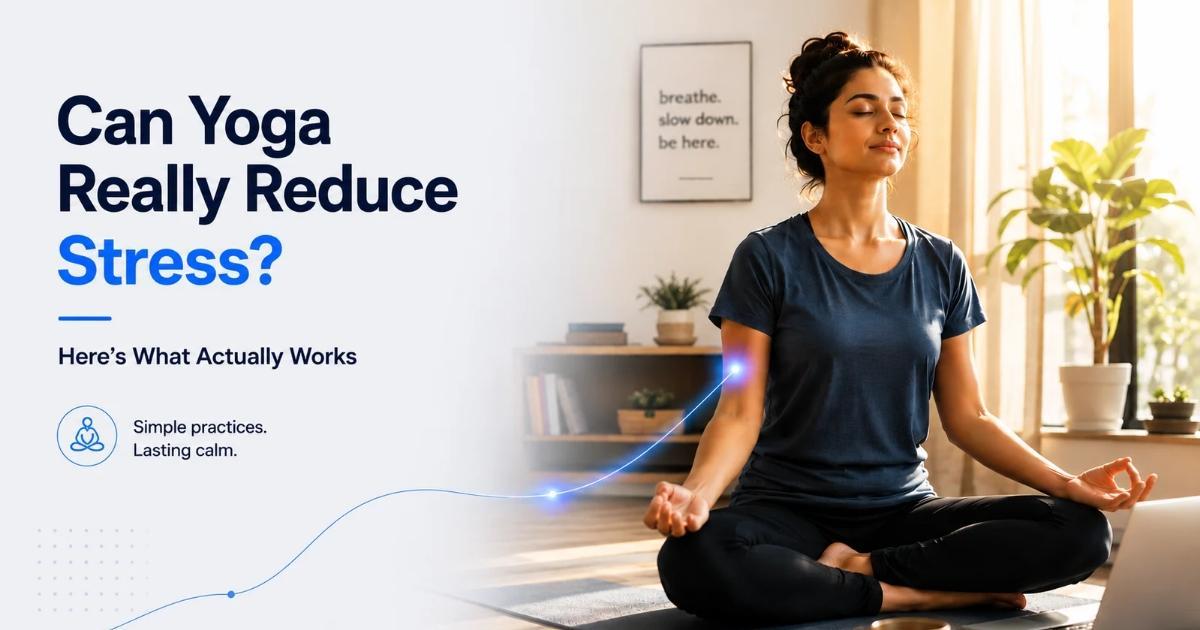
Yoga for stress relief is something many people turn to when daily stress starts affecting their energy, sleep, and overall well-being.
Feeling stressed… even when nothing “big” is wrong?
You move through the day normally. You finish your work, reply to messages, talk to people, handle responsibilities, and everything looks fine from the outside. But internally, something feels wrong.
Your mind feels tired.
Your body feels heavy.
Little things start irritating you.
And even after resting properly, you still do not feel completely relaxed.
This kind of stress many people are living with now.
It doesn’t always come from one major life problem or one bad event. Most of the time, it builds slowly in the background because the mind and body are dealing with more pressure and stimulation than they are actually recovering from.
People often hear things like “just relax,” “take a break,” or “stop thinking too much.”
But in reality, that advice rarely helps for long.
Stress does not disappear just because we decide we no longer want to feel it.
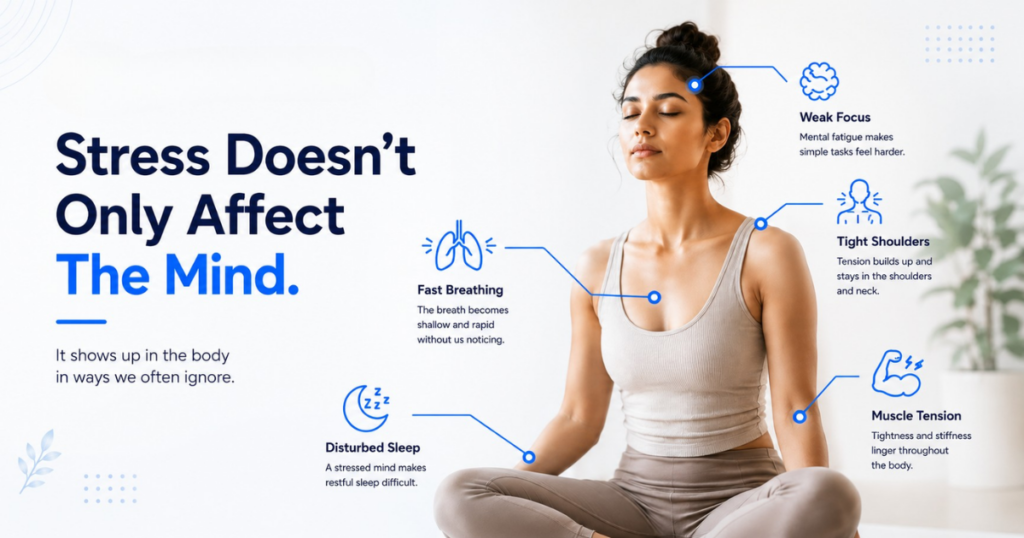
What Stress Actually Is
Many people think stress is only a mental issue.
But the truth is, stress is also a physical response.
Whenever the body feels overloaded for too long, it starts reacting in subtle but constant ways:
- Breathing becomes faster,
- muscles stay tight,
- Sleep becomes disturbed,
- focus gets weaker,
- Your mind keeps running even when you’re sitting quietly.
This is why many people feel restless for no clear reason.
Nothing serious is happening in that moment, but the body still feels like it needs to stay alert.
In simple words, the body does not feel relaxed even when it is supposed to be resting.
Why So Many People Feel More Stressed These Days
One big reason is that the mind rarely gets a break now.
The day starts with checking the phone.
Then messages, work pressure, deadlines, social media, sitting for long hours, poor sleep, unfinished thoughts — everything keeps piling up.
Even when we are not physically doing much, mentally we are constantly busy.
We are scrolling, thinking, replying, comparing, and planning the next thing.
The brain keeps receiving information all day.
So the body stays in a constant background state of stress.
That is why many people feel mentally exhausted even on days when they have not done any heavy physical work.
Can Yoga Really Help With Stress?
Yes, yoga can genuinely help reduce stress.
But not simply because it feels relaxing.
Yoga helps because it works on the exact things stress affects the most:
- breathing,
- muscle tension,
- nervous system activity.
When these three stay disturbed, the body keeps holding stress.
Yoga slowly helps release that pattern.
As breathing slows down, muscles soften, and the nervous system gets quieter, the mind also starts feeling less crowded.
This is why yoga often feels helpful in a deeper way.
It is not just a distraction.
It is an actual body regulation
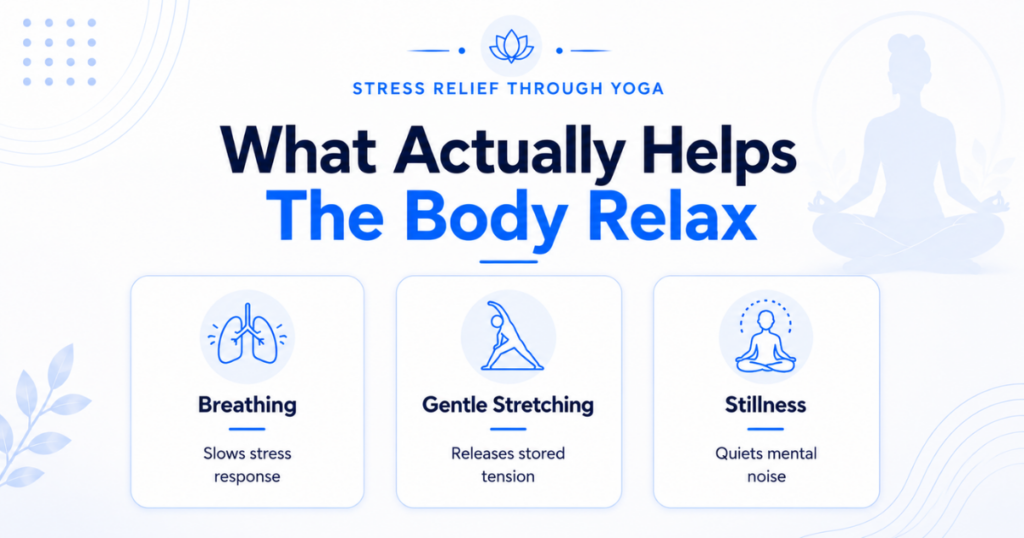
What Actually Works in Yoga for Stress
The good news is that stress-relief yoga does not need advanced poses or difficult routines.
Simple things usually work better.
1. Slower and Controlled Breathing
When people are stressed, breathing becomes fast and shallow without them noticing.
That keeps the body in tension mode.
Slow breathing does the opposite.
It tells the body that there is no emergency right now.
Just a few minutes of deeper breathing can make the chest, mind, and body feel relieved.
This is why breathing exercises are often one of the first recommendations for stress relief.
2. Gentle Stretching
Stress gets stored physically, too.
Usually in the neck, shoulders, back, jaw, and hips.
That is why some people feel stiff all the time.
Gentle yoga stretches help release this tightness.
And because the movements are soft, the body does not feel pushed.
It feels supported.
That makes a big difference when you are already mentally tired.
3. Stillness and Mindfulness
One of the most valuable parts of yoga is learning how to pause.
Just a few quiet minutes of lying down, sitting still, or observing your breath can reduce a surprising amount of mental noise.
At first, this may feel uncomfortable.
But with regular practice, the mind gradually becomes less reactive and much clearer.
What You Will Start to Feel Over Time
Yoga is not an instant fix.
But with consistency, many people begin noticing changes such as:
- calmer emotional reactions,
- better focus,
- improved sleep,
- lower anxiety,
- less mental exhaustion.
Stressful situations may still exist.
But your body does not stay trapped in stress for as long as before.
And that alone makes everyday life feel easier to handle.
A Common Misunderstanding About Yoga and Stress
A lot of people expect to feel instantly calm after trying yoga once or twice.
When that does not happen, they assume it is not working.
But stress usually builds up over weeks, months, and sometimes years.
So naturally, the body also needs time to unlearn that constant state of tension.
This is why yoga works best as a regular support practice, not a one-time solution.
Consistency matters much more than intensity.
Even short daily sessions can do more than occasional long routines.
What Actually Makes the Difference
If your goal is daily stress management, this approach works much better than random difficult workouts:
- short daily practice,
- consistency over intensity,
- slow breathing,
- gentle stretching,
- a few minutes without stimulation.
The nervous system responds best to repeated signals of calm.
Not one powerful effort.
That is why simple yoga can often be far more helpful for stress than complicated fitness routines.
A Practical Way to Start
A beginner routine can be as simple as 10 to 15 minutes:
- 3 minutes of deep breathing,
- 5 minutes of gentle neck and spine movement,
- 3 minutes of Child’s Pose or lying relaxation,
- 2 minutes of quiet sitting.
That is enough to begin.
You do not need the perfect time.
You do not need full motivation.
Small daily repetition is what helps the nervous system slowly reset.
Final Thought
Stress is not always a sign that something is seriously wrong.
Often, it is simply a sign that the body has been carrying too much stimulation without enough recovery.
And recovery does not always need to be dramatic.
Sometimes it begins with a slower breath, softer movement, and a few quiet minutes each day.
Yoga cannot remove every pressure in life.
But it can help you move through that pressure with more steadiness, more clarity, and a little more ease.
And over time, that is what makes stress feel lighter.
FAQ’s
1. Can yoga really reduce stress naturally?
Yes, yoga can help reduce stress naturally by calming the nervous system, slowing the breath, and releasing physical tension stored in the body. Regular yoga for stress relief also helps improve sleep, emotional balance, and mental clarity over time.
2. Which yoga practices are best for stress relief?
The most effective yoga practices for stress relief are usually simple ones, such as deep breathing, gentle stretching, Child’s Pose, lying relaxation, and short mindfulness pauses. These practices help the body slow down without adding more physical strain.
3. How long should I practice yoga daily for stress management?
You do not need long sessions to begin. Even 10 to 15 minutes of daily yoga practice, including breathing exercises and gentle movements, can support daily stress management when done consistently.
4. Is yoga better than intense exercise when feeling stressed?
When the body is already mentally and physically overloaded, gentle yoga can often feel more supportive than intense exercise. Yoga focuses on calming the breath and nervous system, while intense workouts may sometimes add more stimulation.
5. How long does yoga take to show results for stress?
Some people feel lighter after one session, but noticeable long-term change usually comes with regular practice. As the body receives repeated calm signals, stress becomes easier to manage, and emotional reactions begin to feel steadier.