Why Group Yoga Classes Often Work Better Than Practicing Alone
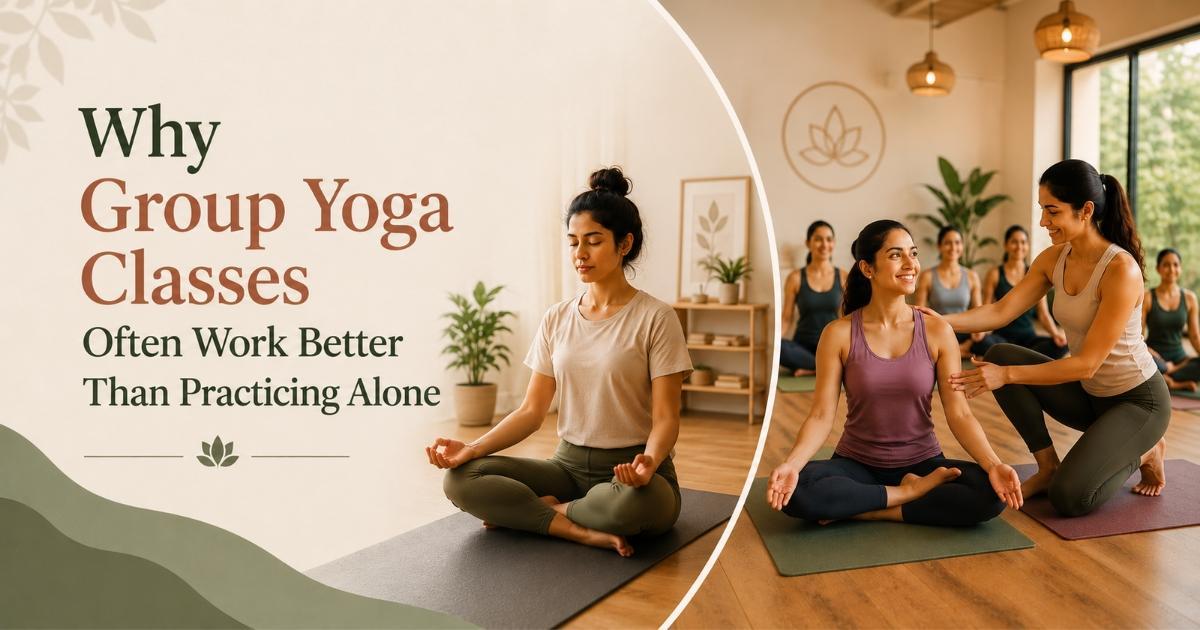
Group yoga classes are one of the easiest ways for beginners to build a consistent yoga practice. But does that mean practicing alone doesn’t work?
Can you practice yoga alone?
Yes, absolutely.
Many people begin their yoga journey alone.
They save a few YouTube videos, download a yoga app, buy a yoga mat, and promise themselves:
“From tomorrow, I’ll practice daily.”
And honestly, for the first few days, it feels wonderful.
There is excitement.
There is motivation.
There is inspiration.
But after some time, something slowly changes.
One day gets skipped because of work.
Another day because of tiredness.
Then practice becomes “whenever possible.”
And gradually, yoga disappears from the routine altogether.
This is actually very common.
Not because people are lazy.
Not because they don’t care about yoga.
But because practicing consistently alone is harder than most people expect.
The Real Difficulty Is Not Starting Yoga — It Is Continuing
Starting yoga is easy.
Continuing it regularly is the real challenge.
When you practice alone, you have to manage everything yourself:
- deciding what to practice
- staying disciplined
- correcting your posture
- maintaining motivation
- creating a routine
Some people can do this successfully.
But for most beginners, it becomes difficult after the initial excitement fades.
That is why group yoga classes help so many people stay consistent.
Why Group Yoga Classes Make a Difference
Group yoga classes are not only about learning yoga postures.
They create an environment that naturally supports consistency, discipline, and motivation.
When people practice together, yoga feels less like another task on the to-do list and more like a meaningful part of daily life.
For many beginners, that support system becomes the reason they continue practicing long enough to actually experience the benefits of yoga.
5 Reasons Group Classes Work Better
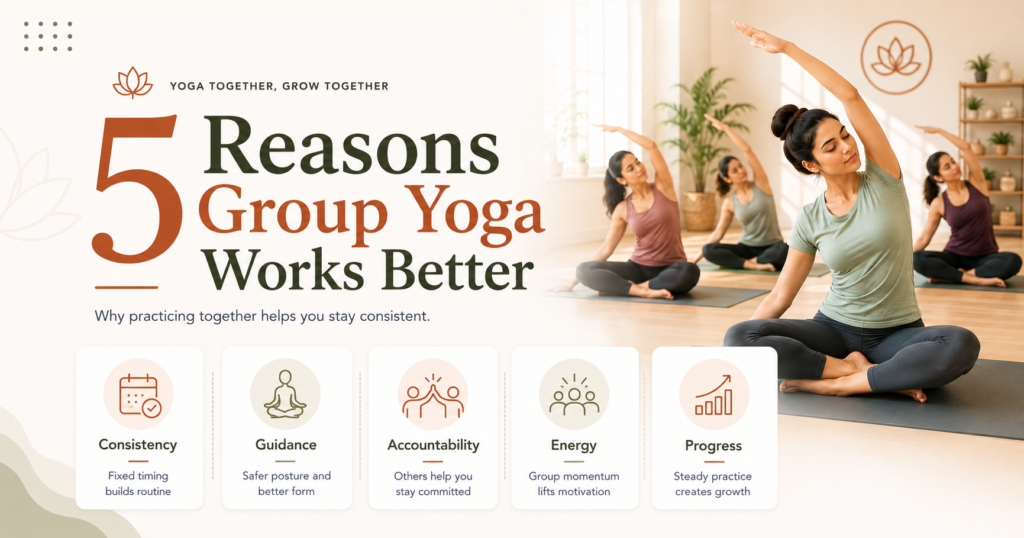
1. A Fixed Routine Makes Practice Easier
One of the biggest reasons people stop exercising or practicing yoga is decision fatigue.
Every day becomes:
“Should I do yoga now?”
“Maybe later.”
“I’ll start properly next week.”
But in a group class, the timing is already fixed.
You simply show up.
That small structure removes mental resistance and helps build consistency naturally.
Over time, the body and mind begin adapting to the routine.
And that consistency creates real progress.
2. Accountability Quietly Keeps You Motivated
There’s something powerful about knowing other people are practicing with you.
On days when motivation is low, group energy helps.
Even simple accountability can make a difference.
When students know:
- The teacher is expecting them
- The group will be there
- Others are continuing their practice
They are far more likely to stay committed.
This is one reason why people often continue group yoga classes for months, while solo routines stop within weeks.
3. Guidance Helps Prevent Mistakes
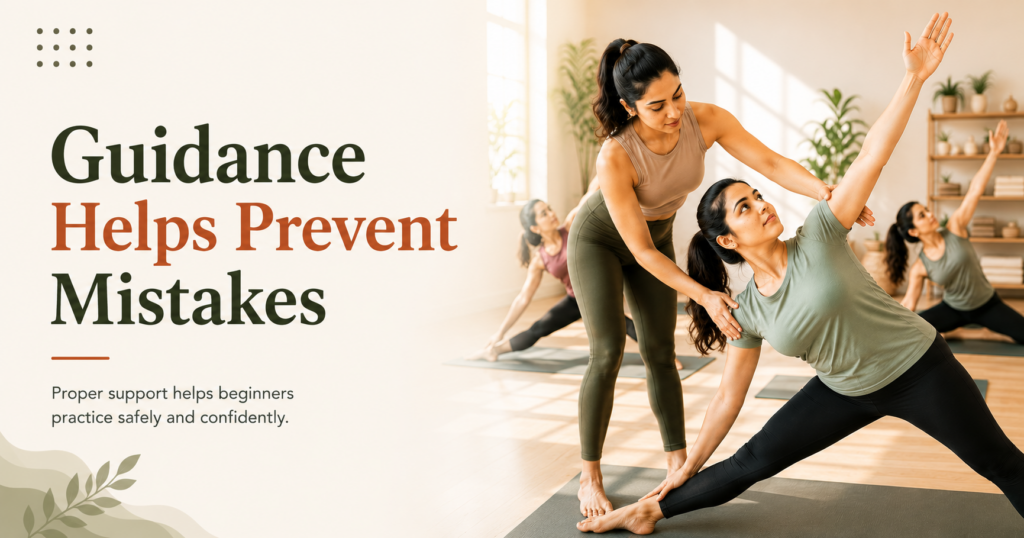
Yoga may look simple from the outside, but proper alignment and sequencing matter a lot.
When practicing alone, beginners often:
- repeat incorrect postures
- strain unnecessarily
- move too fast
- skip important basics
In a guided class, teachers help students practice safely and gradually.
Small corrections improve not only effectiveness but also confidence.
And confidence is important.
Because when people feel unsure whether they are “doing yoga correctly,” they often lose motivation.
4. Practicing Together Feels Different
Yoga is personal, but it does not always have to be solitary.
There is a unique energy in practicing with others quietly in the same space.
You notice:
- better focus
- stronger motivation
- calmer energy
- less distraction
For many students, group classes become a peaceful part of their day — a space where they disconnect from stress and reconnect with themselves.
And that feeling makes them want to return regularly.
5. Slow and Steady Progress Becomes Possible
One common problem with self-practice is inconsistency.
Some days people push too hard.
Other days they stop completely.
But yoga works best with gradual, steady practice.
A structured class usually follows a balanced progression:
- beginner-friendly movement
- gradual flexibility improvement
- breathing awareness
- strength and stability over time
This helps students avoid burnout and stay connected to yoga for the long term.
Does This Mean Solo Yoga Practice Is Bad?
Not at all.
Solo practice can be deeply rewarding.
In fact, experienced practitioners often enjoy practicing independently because they already understand:
- alignment
- breathing
- pacing
- body awareness
But beginners usually benefit from guidance, structure, and community first.
Once a strong foundation is built, self-practice becomes much easier and more meaningful.
The Best Approach Is Often a Balance of Both
For many people, the most sustainable path looks like this:
Start with guided classes.
Build discipline and confidence.
Learn proper techniques.
Then slowly include personal practice at home as well.
This creates both consistency and independence.
And that is where yoga becomes a long-term habit rather than a short-term phase.
Final Thoughts
Yoga is not only about flexibility or difficult poses.
It is about creating a healthier relationship with your body, mind, and daily routine.
And for most people, that journey becomes easier when they are supported by a teacher, a schedule, and a community.
Sometimes, practicing together is what helps the practice stay alive.
FAQ’s:
Q1: Is group yoga better than practicing alone?
Ans: For many beginners, group yoga classes are easier to maintain consistently. Group sessions provide structure, guidance, motivation, and accountability, which often helps people stay regular with their practice.
Q2: Can beginners practice yoga alone?
Ans: Yes, beginners can practice yoga alone using videos or apps. However, many people benefit from guided classes in the beginning because they help with posture correction, routine building, and safe progression.
Q3: Why do people stop practicing yoga regularly?
Ans: Many people stop practicing yoga because of irregular routines, lack of motivation, absence of structure, or uncertainty about proper techniques. Consistency is often harder to maintain without guidance or accountability.
Q4: What are the benefits of group yoga classes?
Ans: Group yoga classes help improve consistency, motivation, confidence, and posture alignment. They also create a supportive environment that makes regular practice feel more natural, especially for those still building their routine.
Q5: Is self-practice important in yoga?
Ans: Yes, self-practice is an important part of yoga, especially for experienced practitioners. Many people combine guided classes with home practice for a balanced and sustainable routine.
Q6: How often should you practice yoga as a beginner?
Ans: Beginners usually benefit from practicing yoga 2–4 times per week consistently. Regular practice matters more than intensity, especially in the early stages.