
Can Yoga Help With Digestion? What Your Body May Be Telling You
Feeling heavy, bloated, or uncomfortable after meals? Your digestion may be affected by more than just what you eat. Here’s where yoga may fit in.
You eat a meal.
A little later, you feel heavy.
Maybe your stomach feels uncomfortable. Maybe you’re bloated. Maybe you simply don’t feel as light and comfortable as you expected.
And you start wondering:
“Is it something I ate?”
Sometimes, it may be.
But digestion isn’t only about food.
Your daily movement, stress levels, sleep, eating habits, and overall routine can also affect how you feel.
And when life gets busy, digestion is often one of the things we stop paying attention to.
We eat quickly.
We sit for hours.
We work through stressful days.
We don’t move much.
Then we wonder why our body doesn’t feel comfortable.
This doesn’t mean yoga is a cure for digestive problems.
But gentle movement, breathing, relaxation, and greater awareness of the body may support a healthier routine around digestion.
Why Does Digestion Sometimes Feel Difficult?
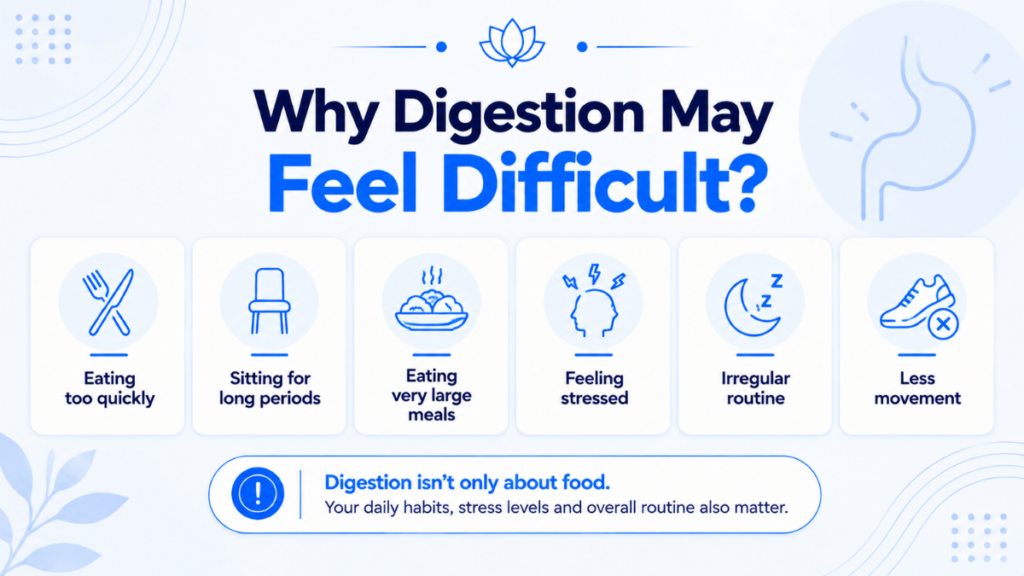
There isn’t always one simple reason.
You may notice digestive discomfort after:
- eating too quickly
- sitting for long periods
- eating very large meals
- feeling stressed
- having an irregular routine
- getting too little movement
Sometimes you may feel:
- bloated
- heavy
- uncomfortable
- sluggish
- overly full
Occasional discomfort is common.
But if digestive symptoms are frequent, severe, or persistent, it’s important not to assume they are simply a lifestyle issue.
Your body may be telling you that something needs more attention.
How Can Stress Affect Digestion?
Your mind and digestive system aren’t completely separate.
When you’re stressed, you may notice changes in your appetite, eating habits, or how your stomach feels.
You may eat quickly without paying attention.
You may skip meals and then eat a large meal later.
Or you may simply feel uncomfortable when you’re under pressure.
This is one reason managing stress can be part of supporting overall digestive well-being.
Yoga may help here because it combines movement with breathing and relaxation.
Research on yoga for stress suggests that it may help reduce perceived stress in some people.
Sometimes supporting digestion starts with helping the whole body slow down.
Can Yoga Really Help With Digestion?
Possibly — but it’s important to keep expectations realistic.
Some research has found potential benefits of yoga for gastrointestinal symptoms, particularly in people with IBS. However, the evidence is still developing, and studies have not been consistent enough to say that yoga treats digestive disorders.
So rather than thinking:
“Yoga will fix my digestion.”
A better way to think about it is:
“Yoga may be one part of a healthier routine that supports how I feel.”
That distinction matters.
Yoga can bring together:
- gentle movement
- breathing
- relaxation
- body awareness
- regular physical activity
And these can all have a place in a balanced lifestyle.
3 Ways Yoga May Support Your Digestive Routine
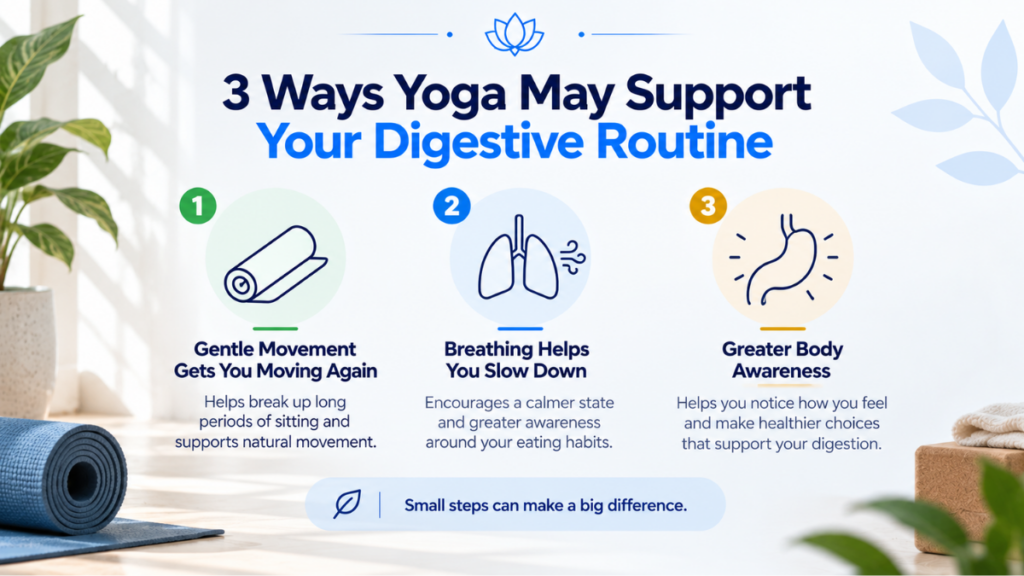
1. Gentle Movement Gets You Moving Again
Many of us spend a large part of the day sitting.
We sit while working.
We sit while travelling.
We sit while watching something at the end of the day.
A gentle yoga practice gives the body an opportunity to move.
Simple movements that involve the spine, hips and whole body can help you break up long periods of inactivity.
You don’t need an intense workout.
Sometimes your body simply needs some movement after being still for too long.
2. Breathing Helps You Slow Down
Have you ever noticed how quickly you eat when you’re stressed or distracted?
You may barely notice the food.
You finish the meal and immediately return to work.
Yoga encourages you to pay attention to your breathing and slow down.
That doesn’t mean a few breathing exercises will suddenly transform your digestion.
But creating moments of calm can help you become more aware of your body and your habits.
And awareness is often where healthier habits begin.
3. Yoga Can Help You Become More Aware of Your Body
One of the less obvious benefits of yoga is learning to notice how you feel.
You begin to recognise:
- when you’re tense
- when you’re rushing
- when you’re holding your breath
- when you need to move
- when your body needs rest
That awareness can extend beyond the yoga mat.
You may start paying more attention to how quickly you eat, how you feel after certain meals, or how your body responds when you’re stressed.
Yoga doesn’t give you all the answers.
It can simply help you start listening more carefully.
What About Yoga Poses for Digestion?
You’ll find plenty of articles online promising that specific yoga poses will “boost digestion” or “cleanse your gut.”
It’s better to be cautious with those claims.
Certain gentle movements, including twists and postures that involve the abdomen, may feel comfortable for some people.
But you don’t need a special pose to have a healthy yoga practice.
A simple beginner routine involving gentle movement, breathing and relaxation can be a perfectly reasonable place to start.
And if a particular movement causes pain or discomfort, don’t force it.
Yoga should support your body, not become another thing you have to push through.
Small Habits Matter Too
Yoga works best when it becomes part of a broader healthy routine.
Along with regular movement, you can pay attention to simple habits such as:
- eating more mindfully
- taking your time with meals
- staying physically active during the day
- getting enough rest
- noticing how stress affects your eating habits
- avoiding long periods of complete inactivity
You don’t need to change everything at once.
One small habit that you can actually maintain is more useful than a perfect routine that lasts three days.
What If You Already Have Digestive Problems?
This is important.
Yoga should not replace medical care for ongoing digestive symptoms.
If you regularly experience significant pain, persistent bloating, blood in your stool, unexplained weight loss, repeated vomiting, or other concerning symptoms, speak with a qualified healthcare professional rather than trying to manage the problem through yoga alone.
If you have a diagnosed digestive condition such as IBS, discuss adding yoga or another exercise routine with your healthcare professional if you’re unsure whether it’s appropriate.
The research around yoga and IBS is promising in some areas but still limited and mixed.
Yoga can be part of your overall well-being. It doesn’t have to carry the responsibility of treating everything.
A Simple Way to Begin
If your goal is simply to support a healthier daily routine, keep your practice gentle.
You could start with:
- 10–15 minutes of gentle yoga
- slow, comfortable breathing
- simple movements for the spine and whole body
- a few quiet minutes to relax
You don’t need to practise immediately after a heavy meal.
Give your body time and choose a time when you feel comfortable.
And pay attention to how you feel.
The goal isn’t to force digestion to happen faster. It’s to give your body regular movement, calm and attention.
Final Thoughts
Digestion can be affected by many things, and there isn’t one solution that works for everyone.
Yoga isn’t a magic answer for bloating, discomfort, or digestive conditions.
But it can be a useful part of a healthier lifestyle by bringing together movement, breathing, relaxation and body awareness.
Sometimes your body doesn’t need another extreme solution.
It may simply need you to slow down a little.
Move more regularly.
Breathe.
Pay attention.
And notice what your body has been trying to tell you.
Yoga can be one gentle way to begin listening.
Frequently Asked Questions
Can yoga help with digestion?
Yoga may support digestive well-being through gentle movement, breathing, relaxation and stress management. Some research suggests yoga may help reduce certain gastrointestinal symptoms, particularly in IBS, but the evidence is still developing.
Which yoga is best for digestion?
There isn’t one specific type that is proven to be best for everyone. Gentle, beginner-friendly yoga that combines comfortable movement and breathing can be a reasonable place to start.
Can yoga help with bloating?
Some people may find gentle movement and relaxation helpful when they feel bloated. However, persistent or severe bloating should not simply be attributed to a lack of yoga and may need medical evaluation.
Should I use yoga instead of treatment for digestive problems?
No. Yoga can complement a healthy lifestyle, but it shouldn’t replace medical evaluation or treatment for persistent or concerning digestive symptoms.