Why Your Neck and Shoulders Feel Tight All the Time — And Where Yoga Fits In
If your neck feels stiff and your shoulders seem to carry the weight of your entire day, you’re not alone. Here’s why that tension happens and how yoga may help.
You finish work.
You close your laptop, get up from your chair, and suddenly notice it.
Your neck feels stiff.
Your shoulders feel heavy.
Maybe you roll your shoulders a few times, stretch your neck, or massage the area for a minute.
It feels better.
But the next day, it comes back.
For many people, this has quietly become part of everyday life.
Long hours at a desk.
Constant phone use.
Stress.
Too little movement.
Not enough breaks.
And eventually, that occasional stiffness starts feeling normal.
But just because something is common doesn’t mean you have to ignore it.
Why Do Your Neck and Shoulders Feel Tight?
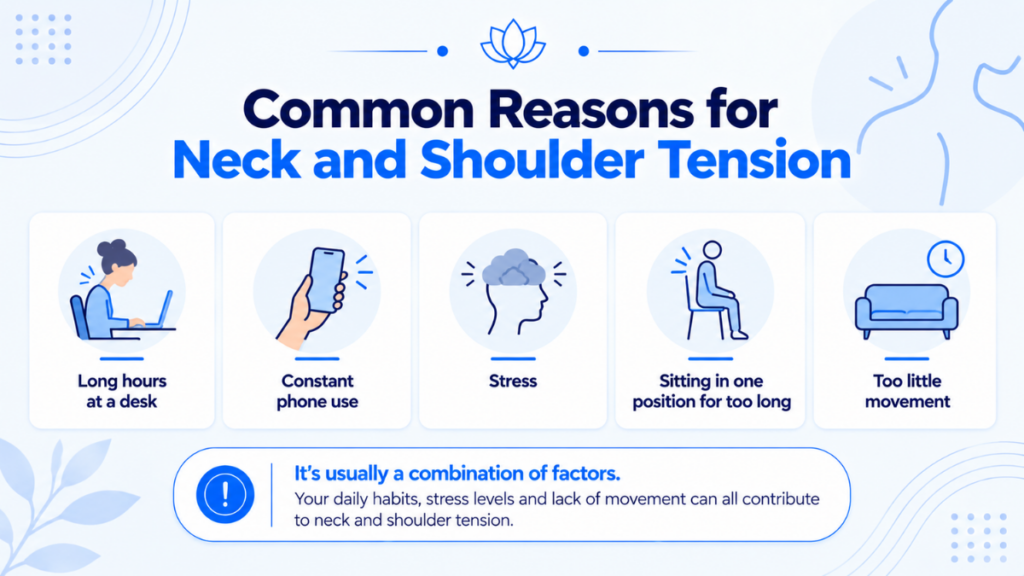
Neck and shoulder tension rarely comes from just one thing.
Often, it’s a combination of how you spend your day and how your body responds to it.
You might spend hours:
- looking at a laptop
- scrolling on your phone
- sitting in one position
- driving
- working without taking movement breaks
- carrying stress without realising it
Your body adapts to the positions and habits you repeat.
And when movement becomes limited, certain areas can start feeling stiff and uncomfortable.
Stress can add another layer.
When you’re under pressure, you may unconsciously tense your shoulders, tighten your jaw, or breathe more shallowly.
You may not even notice you’re doing it.
Until your shoulders start feeling like they’ve been carrying the entire day.
It’s Not Always About “Bad Posture”
We often hear:
“Your posture is bad. Sit straight.”
But the body isn’t designed to stay in one perfect position all day.
Even a good sitting position can become uncomfortable if you stay there for hours without moving.
The bigger issue is often lack of movement and variety.
You change position.
You move your neck.
You stretch your shoulders.
You get up.
You walk around.
These small changes give your body opportunities to move instead of holding the same position continuously.
So rather than trying to maintain perfect posture every minute, think about moving more often.
How Stress Shows Up in the Neck and Shoulders
Have you ever noticed your shoulders creeping upward when you’re stressed?
You might be answering emails, rushing to finish something, or dealing with a difficult conversation.
Without thinking, your shoulders tighten.
Your breathing changes.
Your jaw may clench.
Then the stressful moment passes, but your body stays tense.
This is one reason neck and shoulder discomfort can sometimes feel worse during particularly stressful periods.
Yoga can be useful here because it doesn’t only focus on physical movement.
It also brings attention to:
- breathing
- body awareness
- relaxation
- how you’re holding tension
Sometimes the first step isn’t stretching the tight area. It’s noticing that you’re holding tension there in the first place.
Can Yoga Help With Neck and Shoulder Tension?
It may.
Research on yoga for chronic neck pain has found potential short-term improvements in pain, disability and neck mobility, although the quality and scope of evidence vary. More recent reviews also suggest yoga can have short-term benefits for chronic neck pain.
But it’s important to keep the claim realistic.
Yoga isn’t a guaranteed solution for every type of neck or shoulder problem.
And you don’t need to think of it as something that “fixes” your neck.
Instead, yoga can be one way to introduce:
- more regular movement
- gentle mobility
- body awareness
- breathing
- relaxation
into your daily routine.
The goal is to help your body move and feel more comfortable, not to force it into complicated positions.
What Kind of Yoga Can Help?
You don’t necessarily need an intense yoga session.
For someone dealing with everyday stiffness, a gentle practice may be a better place to start.
You might include:
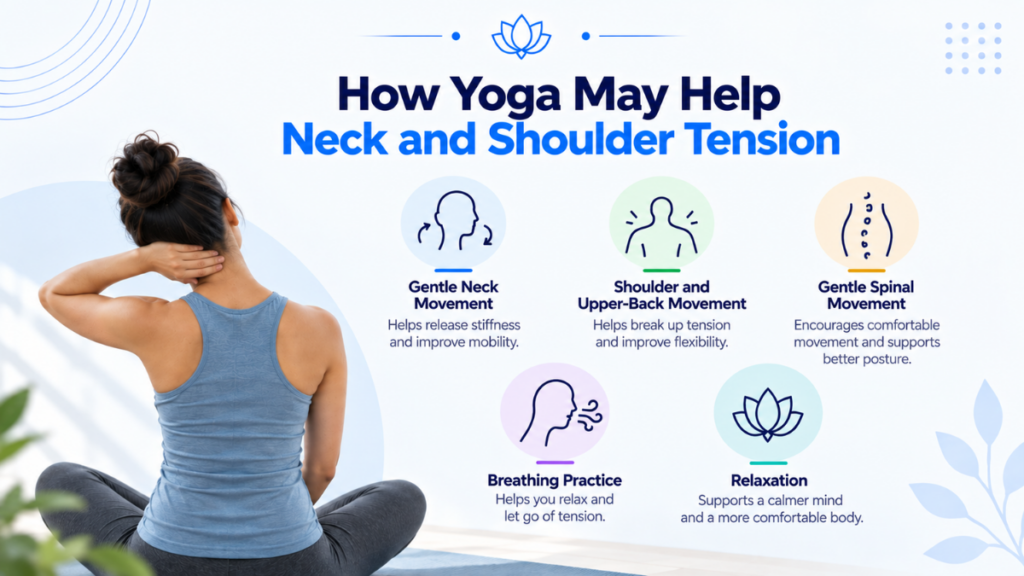
Gentle Neck Movement
Slowly moving the neck within a comfortable range can help you become more aware of stiffness and mobility.
Don’t force the movement or make large, aggressive circles.
Shoulder and Upper-Back Movement
Simple movements that involve the shoulders, chest and upper back can help break up the feeling of being stuck in one position.
Gentle Spinal Movement
Movements such as Cat-Cow can encourage comfortable movement through the spine while bringing attention to breathing.
Breathing Practice
Slow, comfortable breathing can help you pause and notice whether you’re unconsciously holding tension.
Relaxation
Sometimes the body needs less effort, not more.
A few quiet minutes at the end of practice can help you transition out of a busy day.
What If You Sit at a Desk All Day?
You don’t have to wait until the evening to do something about stiffness.
Small movement breaks throughout the day can be useful.
Try:
- standing up between meetings
- walking for a few minutes
- changing your sitting position
- rolling your shoulders gently
- looking away from the screen regularly
- taking a few slower breaths
And if you have 10–15 minutes, a short yoga practice can become another way to break up the day.
You don’t need to compensate for eight hours of sitting with one exhausting workout.
Regular movement throughout the day can be a much more realistic habit.
A Common Mistake: Stretching Too Hard
When something feels tight, the natural reaction is often:
“I need to stretch it more.”
But harder isn’t necessarily better.
If a movement causes pain, sharp discomfort, tingling, numbness, or symptoms travelling into your arm, don’t try to push through it.
Yoga should feel supportive.
You are not trying to win a flexibility competition with your neck.
Gentle and controlled movement is a better starting point than forcing a deeper stretch.
A Simple Way to Start
If your neck and shoulders often feel tense, keep your first few sessions simple.
Try 10–15 minutes of:
- gentle shoulder movement
- comfortable neck mobility
- Cat-Cow or other easy spinal movements
- relaxed breathing
- a few minutes of quiet rest
You can practise in the morning, during a break, or in the evening.
The important thing is finding a routine you can actually maintain.
One gentle session won’t undo months of sitting and stress.
But small, regular changes can help you become more aware of your body and how it responds to your daily habits.
When You Shouldn’t Simply Blame It on Desk Work
Not every neck or shoulder problem is caused by sitting or stress.
If your discomfort is severe, persistent, follows an injury, or comes with symptoms such as numbness, tingling, weakness, dizziness, or pain travelling into your arm, it’s better to speak with a qualified healthcare professional.
Yoga should complement appropriate care, not replace it.
Even research supporting yoga for chronic neck pain generally concerns specific populations and structured interventions, so we shouldn’t assume the same results apply to every kind of neck or shoulder problem.
Final Thoughts
Your neck and shoulders may be carrying more than you realise.
Hours at a desk.
Constant screen time.
Stress you haven’t had time to process.
Too little movement.
And sometimes, simply the habit of staying in the same position for too long.
You don’t need to completely change your life to start taking better care of your body.
Stand up a little more often.
Move gently.
Breathe.
Pay attention to where you’re holding tension.
And when it feels right, bring a little yoga into your routine.
Not because your body needs to be pushed harder.
Because sometimes it simply needs to move, breathe, and feel supported again.
Frequently Asked Questions
Can yoga help with neck and shoulder tightness?
Yoga may help some people with neck and shoulder discomfort by combining gentle movement, mobility, breathing and relaxation. Research suggests yoga may provide short-term benefits for chronic neck pain, although results can vary.
Why are my neck and shoulders always tight?
Common contributors can include prolonged sitting, screen use, limited movement, stress and repeatedly holding the body in the same position. However, persistent tension can have many possible causes.
Is yoga good for people who work at a desk?
Yes. Gentle yoga can be a practical way to introduce more movement and body awareness into a desk-based routine. It can also complement regular movement breaks during the workday.
How long should I practise yoga for neck and shoulder tension?
You don’t necessarily need a long session. Starting with 10–15 minutes of gentle movement and breathing can be a practical option, especially if you’re building a regular habit.